Ocular Migraine: What Visual Symptoms Mean and When to Seek Care
10/23/2026 • Thomas Kurian, M.D.
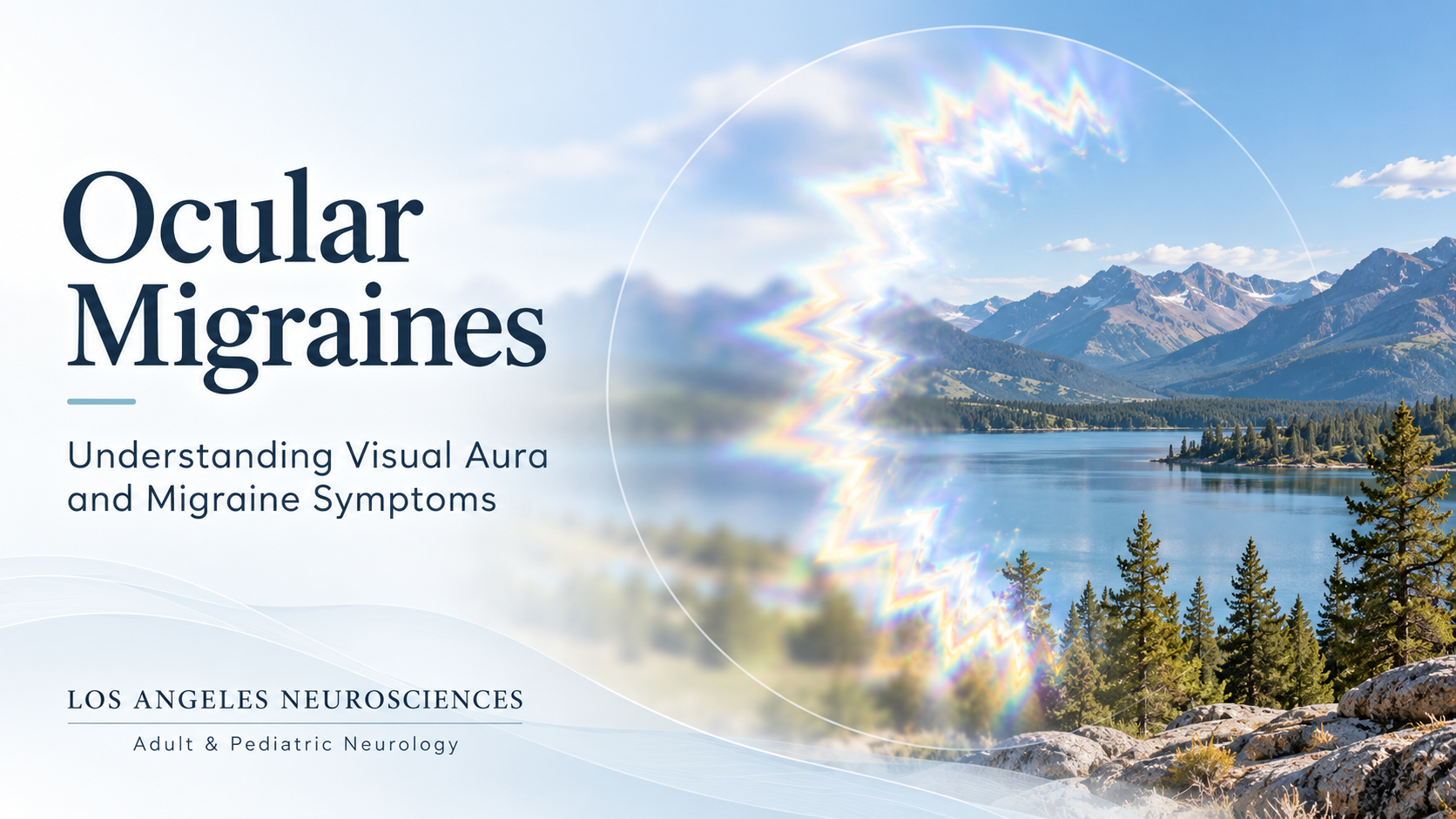
Ocular Migraine: What Visual Symptoms Mean and When to Seek Care
Flashing lights, shimmering zigzags, or a blind spot moving across your vision can be unsettling—especially the first time it happens. Many people call these symptoms an “ocular migraine.” But that phrase can describe different conditions, and some visual changes require urgent medical attention.
“Ocular migraine” is not a formal medical diagnosis. People commonly use it to describe either migraine with visual aura, which originates in the brain, or retinal migraine, a rare condition affecting one eye. Understanding the distinction helps you recognize when symptoms need immediate evaluation.
What Is Migraine With Visual Aura?
Migraine with visual aura causes temporary changes in vision related to activity in the brain rather than a problem within the eye itself.
Symptoms may include:
- Shimmering or zigzag lines.
- Sparkling lights or a bright, curved arc.
- A blind spot with a jagged or glowing border.
- A visual disturbance that gradually expands across your field of view.
A typical visual aura develops gradually over at least five minutes, lasts between five and 60 minutes, and resolves completely. A headache may follow, but some people experience visual aura without any headache.
Why Can It Seem to Affect Only One Eye?
A brain-based visual disturbance can affect one side of your visual field while still being present through both eyes. This can make it difficult to tell whether the problem involves one eye or both.
During an episode, covering one eye and then the other may help you describe the symptoms. If the same disturbance remains visible regardless of which eye is covered, that pattern can suggest a brain-based visual aura.
However, this observation is not enough to make a diagnosis or rule out other causes. It should never delay medical evaluation.
What Is Retinal Migraine?
Retinal migraine is a rare condition that causes temporary visual symptoms in one eye. These may include flashes of light, dimming, graying, or partial to complete loss of vision. Symptoms may occur before or during a headache and usually last less than an hour.
Vision loss in one eye should not automatically be attributed to migraine. Other possible causes include:
- A blocked blood vessel supplying the retina.
- Disease involving the carotid artery, which helps supply blood to the eye and brain.
- Giant cell arteritis, an inflammatory condition that can reduce blood flow to the eye.
These conditions must be considered and ruled out before a clinician diagnoses retinal migraine.
When Should You Seek Immediate Medical Care?
Visual changes limited to one eye warrant immediate evaluation by an ophthalmologist or an emergency department—even if your vision returns to normal. A temporary episode can still reflect a serious underlying problem.
Do not assume that an episode is harmless because you also have a headache, have a history of migraine, or notice that your symptoms have resolved.
Covering each eye separately may provide useful information about what you are experiencing, but it is not a substitute for medical care.
What Causes Visual Aura?
Visual aura is thought to result from a slowly spreading wave of altered electrical activity across the brain’s surface. This process is called cortical spreading depression. Despite its name, it is not related to depression as a mood disorder.
Hormonal changes may also influence aura. Some people notice changes in their symptoms around their menstrual cycle or during pregnancy. These patterns can be useful to discuss with a clinician when reviewing your migraine history.
Does Migraine With Aura Increase Stroke Risk?
Migraine with aura is associated with a higher risk of ischemic stroke, which occurs when blood flow to part of the brain is blocked. However, an increase in relative risk does not mean that most people with aura will have a stroke. The overall risk remains relatively low.
Smoking and estrogen-containing contraceptives can further increase stroke risk in people with aura. If you experience visual aura, discuss these factors with your healthcare professional so that prevention and contraceptive decisions reflect your individual circumstances.
Migraine treatment can help manage symptoms, but there is currently no evidence that treating migraine itself reduces stroke risk. Addressing modifiable risk factors remains important.
How Is Migraine With Visual Aura Treated?
Because visual aura often resolves on its own within an hour, treatment generally focuses on managing an accompanying headache and preventing troublesome episodes.
Depending on your medical history and symptoms, treatment may include:
- Acute headache treatment. Nonsteroidal anti-inflammatory drugs, or NSAIDs, and prescription migraine medications may help treat the headache associated with an episode.
- Preventive treatment. Frequent or disruptive episodes may warrant a discussion about preventive options.
- Magnesium. This is one of the better-studied over-the-counter preventive options and may help some people. Discuss it with a clinician rather than using it as a substitute for evaluation.
The right approach begins with confirming what is causing the visual symptoms. Treatment for an established migraine pattern is different from the evaluation needed for unexplained vision loss.
What Should You Tell Your Doctor?
A detailed description of an episode can help your clinician distinguish visual aura from other conditions. Useful details include:
- Whether the disturbance appeared in one eye or remained visible through either eye.
- Whether you saw flashing lights or experienced dimming or missing vision.
- Whether symptoms developed gradually.
- How long the episode lasted.
- Whether your vision returned completely.
- Whether a headache occurred before, during, or after the visual symptoms.
These details can support a medical evaluation, but they do not replace one.
The Bottom Line
“Ocular migraine” can obscure an important distinction: visual aura usually originates in the brain and affects vision through both eyes, while retinal migraine affects one eye and is rare.
Visual changes limited to one eye require immediate medical evaluation because other causes can threaten vision. Getting a precise diagnosis is the first step toward appropriate treatment—and understanding which future symptoms should prompt urgent care.
This content is for general education and does not replace individualized medical advice, diagnosis, or treatment.
Based on “What is ocular migraine and how is it treated?” by Olivia Begasse de Dhaem, MD, FAAN, published in Brain and Life.